Panama canal cuts daily ship transits as drought reduces watershed rainfall
Shipping lines face rising auction prices for canal passage, with the authority warning further transit cuts are possible as dry months approach.
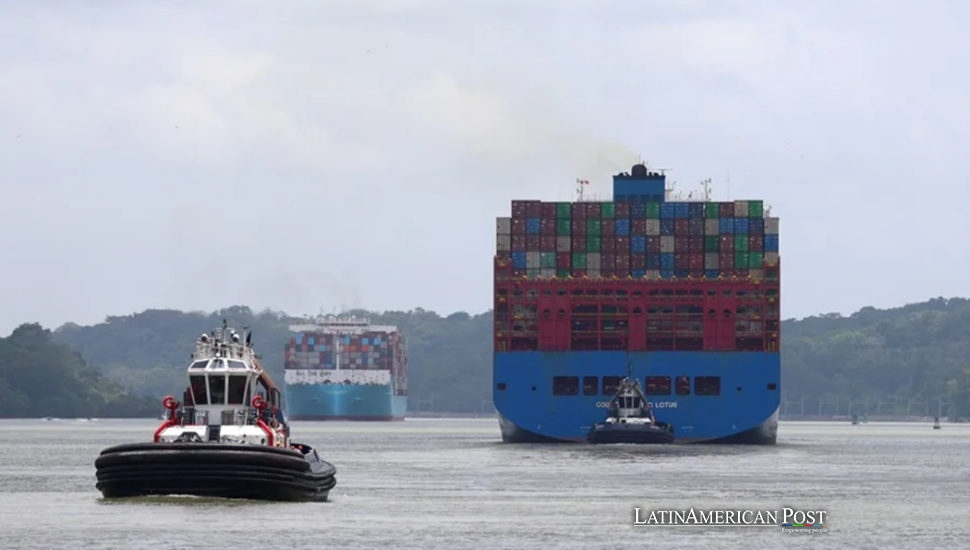
Rain in the Panama Canal's watershed fell 34 percent below the historical average from May through August, forcing the canal authority to announce it would cut daily transits from 36 to 34 on September 3, and then to 32 on September 15, AFP reported via Phys.org on August 21.
The authority has not ruled out further cuts; France 24 reported on August 20 that this week's schedule is only a floor as drier months approach.
A waterway that carries about 5 percent of world maritime trade and roughly 40 percent of U.S. container traffic is being throttled by weather. At stake is whether shipping lines that depend on it will reroute for good — and the queue price is the honest readout of how scared they are.
The auction is where the fear lives. Nine out of every ten ships using the canal hold a reservation bought in advance; the remaining slots are auctioned to the highest bidder, AFP reported via Phys.org on August 21. Before the Iran war, the average winning bid was about $135,000 per transit.
In April this year, one shipping line paid $4 million for a single crossing through the same auction, roughly thirty times that old average.
Four million dollars for one crossing: the line calculated it was cheaper than going the long way around.
The Canal Authority, under Administrator Ricaurte Vásquez, wants revenue and water in the same account, and the auction is how it converts scarcity into cash without touching the published toll book. Carriers want predictable slots at predictable prices — AFP via Phys.org listed the canal’s main users on August 21 as the United States, China, Japan, Chile and South Korea — but are being forced to bid against each other in public.
Panama’s own citizens want the water, because the lakes that float the ships also supply drinking water to half the country’s 4.2 million people. The authority cannot drain Gatun for container ships without answering to voters in Panama City.
This week’s trigger is a weak rainy season. The pressure underneath is older. The Maritime Executive noted in August 2026 that the canal runs on rain, that the locks drain tens of millions of gallons of freshwater into the sea during each transit through the older chambers, and that every El Niño turns that design flaw into a revenue problem.
AFP’s August 21 report recalled that the 2023 drought was worse — the authority cut daily transits from 38 to 22, a reduction of more than 40 percent, and queues stretched past two weeks. This year's cuts are so far shallower, but the authority itself says this El Niño is shaping up as one of the strongest on record, according to AFP via Phys.org on August 21.
When Egypt closed the Suez Canal in 1956, the shipping world did not wait for it to reopen; instead, it built systems that assumed closure — bigger tankers designed for the Cape route, new bunkering networks, new insurance terms — and much of that infrastructure outlived the crisis by decades.
The counterexample is the 2021 Ever Given blockage: it seized the world’s attention for six days, freight rates spiked, but within a quarter nothing had changed, as everyone correctly read it as an accident rather than a climate. Which case Panama resembles is the live question, and the auction says the market is leaning toward 1956 logic, treating the drought as a lasting condition rather than a passing event.
1956 logic
Carriers without reservations — mostly smaller lines moving bulk grain, LPG and dry cargo — pay the auction or round the Cape of Good Hope, adding days of steaming and a fuel bill to each voyage, AFP reported via Phys.org on August 21. Lines with bookings pass their costs down. Surcharges on Asia-to-U.S. East Coast routes, and tighter effective capacity per transit as draft limits shave container boxes off each ship.
The cargo that pays most dearly is the seasonal kind — Chilean fruit, U.S. LNG to Asia, Gulf grain — where two weeks is the difference between a market and a missed market. U.S. East Coast ports that built their business on canal-dependent Asia services absorb the demand leakage first.
The windfall line item
The Canal Authority’s auction book becomes a windfall line item, as single transits have already cleared at $4 million this year; even a handful of premium slots a month rivals a small country’s port budget, according to AFP via Phys.org on August 21.
Alternative routes collect what the canal loses: Cape-route bunker suppliers at places like Las Palmas and Durban sell the fuel that detours burn. Carriers holding long-term slot contracts signed before the drought effectively own a valuable option, since AFP reported via Phys.org on August 21 that their reserved transits now command auction prices many times what they pay.
Panama needs to sell more water to the sea to fund the country, and it needs to stop selling water to the sea to keep the country drinking. The authority's solution so far is pricing — auctions, surcharges, draft limits — which works until the lakes drop low enough that drinking water wins.
In 2023 the authority kept transits down through the dry season and the canal still delivered its revenue, according to AFP's August 21 report; the risk this time is less bankruptcy than the gradual migration of cargo contracts to routes and ports that no longer assume the canal exists.
A wet October
Auction premiums and the transit count tell the future together. If winning bids keep printing multiples of the old average after September 15, and the authority cuts below 32 or lowers the maximum draft again, the drought is being treated as a multi-year condition and contracts will start migrating, AFP reported via Phys.org on August 21.
A wet October would say the opposite. The canal’s hydrology turns on the rainy season, and one decent month would refill Gatun enough for the authority to restore full transits and let auctions collapse back toward their old average — the recovery the canal managed before this El Niño arrived, according to Al Jazeera on August 21.
The last consequence lands in an unexpected place: American inland freight. About 40 percent of U.S. container traffic moves through this canal, AFP reported via Phys.org on August 21, and when capacity shrinks the cargo does not vanish — it reroutes to West Coast ports and cross-country rail, repricing a freight network that assumed the canal was weather-proof.
Panama is discovering what it actually sells. Rain, and rain has ceased to be a reliable inventory. That is what the auction price records — and what the world’s shippers are now being forced to pay.