Satellite data and shipping logs show contradictory reports on oil flows in Hormuz
The US and Iran each claim authority as official figures describe normal shipments but visible tanker traffic sharply falls after transit rules expire.
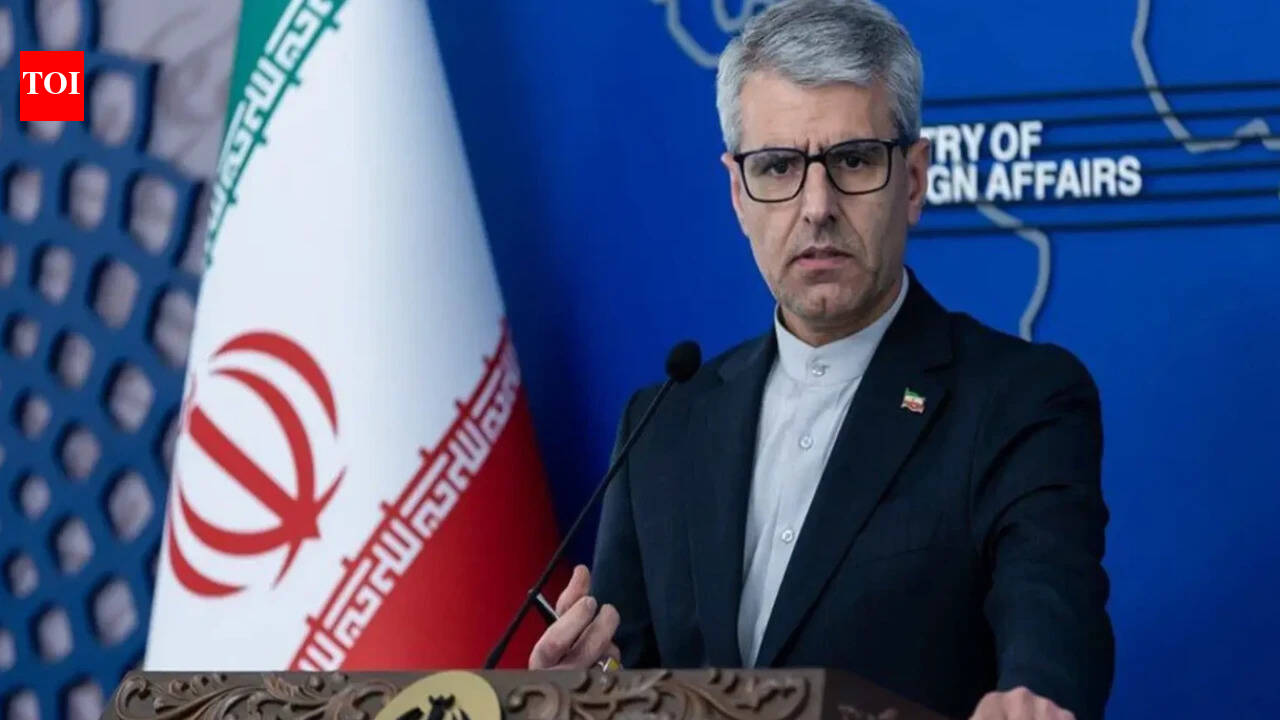
Two things were true at the same time this week, and they cannot both survive. On Thursday, US Energy Secretary Chris Wright said the military had helped move more than fifteen million barrels of oil through the Strait of Hormuz on Tuesday alone, a figure close to normal peacetime flow; gCaptain and Bloomberg reported that on August 22.
Yet automatic tracking systems counted only a handful of visible tanker crossings per day all week, against roughly a hundred thirty before the war, as Gulf News noted on August 21. Someone is describing a different strait than the one the satellites see.
The question is who has been forced to pay what to move the oil, and it sharpened this week because the rules expired. A June 17 memorandum between Tehran and Washington setting rules for transits — no fees, safe passage, a pause in open war — lapsed on August 17 with nothing replacing it, as UANI's shipping update noted on August 19.
Within hours both sides reverted to their opening positions: Iran demanding every ship seek its approval before entering, Washington insisting its naval blockade decides who sails. Two days later President Trump declared the strait open even as his own Navy stopped Iran-linked hulls, and threatened to bomb Oman, the very country trying to broker joint management of the waterway, Al Jazeera reported on August 20.
Two claimed channels
The slow pressure underneath predates any memorandum. Since early 2026, Iran has tried to turn the world's most important oil chokepoint into a tollgate: permits, fees, a preferred northern route hugging Larak and Qeshm islands. Washington answered with a southern corridor in Omani waters under naval escort, plus mines, missiles, and drones aimed at whatever defies each side's rules. The result is a strait fractured into two claimed channels and, for most captains, a third unclaimed one — dark.
That third route is what the satellite counts exposed. Maritime intelligence firm Kpler found that of 112 crude, LNG and LPG carriers crossing between August 1 and August 19, only 21 openly used the Iranian lane and just two used the American-backed Omani lane; more than eighty percent went dark, switching off their transponders mid-crossing, as Al Jazeera reported using Kpler data on August 20.
Of 236 vessels of all kinds over the same stretch, 148 traveled untracked — six out of ten, Al Jazeera reported on August 20. A month earlier almost none used the Omani side; now Kpler analysts say more than eighty percent of liquids traffic takes the Omani channel or sails black, which they read as Tehran having "at least partially lost control," according to Gulf News citing Kpler on August 21.
On the barrels question, Kpler's data cuts both ways. Its carrier counts show the ships themselves kept crossing at something close to normal numbers once the dark ones are included, so Wright's total is not impossible — but because four out of five hulls sail with transponders off, no independent tracker can verify the tonnage he claims, only that the traffic exists, as shown by Al Jazeera and Kpler data on August 20. The official counts ran single digits because the ships stopped announcing themselves.
Iran wants recognition that the strait is administratively its own — permits today, fees tomorrow — and it still holds the tools of punishment: drones, fast boats, mines, and a record of using them. The Trump administration wants the visual of full flow without admitting it is running armed convoys, hence the fifteen-million-barrel claims that no tracker can check, Gulf News noted on August 21.
Oman wants to be indispensable as the neutral landlord of the southern shore and is being bombed-threatened for brokering. The Gulf exporters want barrels gone and reputations clean. And the shipowners want, simply, not to be hit — which is why the ones still sailing are the risk-tolerant few or the owners with state protection.
Someone pays seven figures a day
The cost of that caution now sits in the freight market. Bloomberg carried Baltic Exchange assessments on August 18 showing earnings for a supertanker hauling crude from the Gulf to China reaching nearly five hundred ten thousand dollars a day on Monday, the highest since late June, when Iran resumed striking transiting ships.
One very large crude carrier, the Sinokor-operated Mongolia Prosperity, was fixed at thirty-one million dollars for a single voyage to east Asia — a rate benchmarked off the industry's standard scale and inflated roughly sixfold above normal — by the shipping arm of a Chinese refiner, whose charterer also ate a war-risk insurance premium in the high single digits of hull value; on a typical hundred-million-dollar tanker, that means several million dollars of extra cover for one voyage (Bloomberg via gCaptain, Aug 18).
Those numbers are the honest ledger the press conferences avoid. Someone pays seven figures a day so the rest of us can pretend the strait works.
The physical toll lands on crews. Abu Dhabi's ADNOC said in a statement carried by Al Jazeera on August 20 that since the war began, fifteen of its vessels have been attacked by missiles and drones crossing the strait, killing one crew member and wounding twenty; the latest strike came August 8, on a company tanker in mid-transit. Meanwhile, Iran has begun selectively granting passage — Reuters reported on August 22 that this week it let a number of Iraqi tankers through after repeated requests from Baghdad. A tollgate does not need to close; it needs you to apply.
The Tanker War analogue
In the Tanker War of 1984 to 1988, Iranian attacks in the same water pushed Kuwait's exports under American flag and American escort in Operation Earnest Will, and traffic survived because both superpowers wanted flow more than victory. That analogue says escorts can keep oil moving indefinitely. This time argues otherwise. There is no second patron. In 1987 the Soviet Union quietly offered tankers its own flag as a shield, giving owners two protectors to choose from and keeping premiums bounded. Today owners have exactly one navy to hide behind, so instead of flags they chose silence — transponders off, routes undeclared.
The first consequence is that visible transit counts stay meaningless, so price discovery shifts from transponder-tracking dashboards to freight fixtures and insurance quotes, where truth still clears. Second. The dark fleet grows — older, cheaper hulls, weaker safety margins — meaning the next collision, grounding or spill happens among ships that tracked services could not follow.
Third. The Gulf exporters' best customers begin paying twice, once in freight and once in fear, and China's refiners quietly diversify toward Russian and Atlantic barrels while Riyadh and Abu Dhabi discount to hold Asian share. The profits concentrate in the strangest place. A handful of battle-tested owners like South Korea's Sinokor, who now name their price because few others will sail.
Confirmation sits on figures already published: Kpler's next fortnight showing the dark share holding above three-quarters while Baltic Exchange assessments stay above four hundred thousand dollars a day would mean flow persists but legitimacy does not, on figures Bloomberg carried from the Baltic Exchange on August 18 and Al Jazeera reported with Kpler data on August 20. What breaks it is a signed successor to the June memorandum restoring open transponder operation and pulling war-risk premiums back down within weeks — the tollgate was a negotiating pose all along.
The judgment rests not on Brent futures but on the Filipino and Indian deckhands sailing blacked-out hulls past two navies, on the ADNOC crews counting fifteen attacks and one coffin. The strait has not closed and may never close.
It has become a place where moving oil legally is impossible and moving it silently is merely expensive — and whoever controls the permission slip, the satellites have already recorded who pays.