Hengli obeys U.S. sanctions even as Beijing orders firms to defy them
China’s Hengli Petrochemical stopped sanctioned crude purchases despite government opposition, showing U.S. penalties can override official defiance inside major Chinese companies.
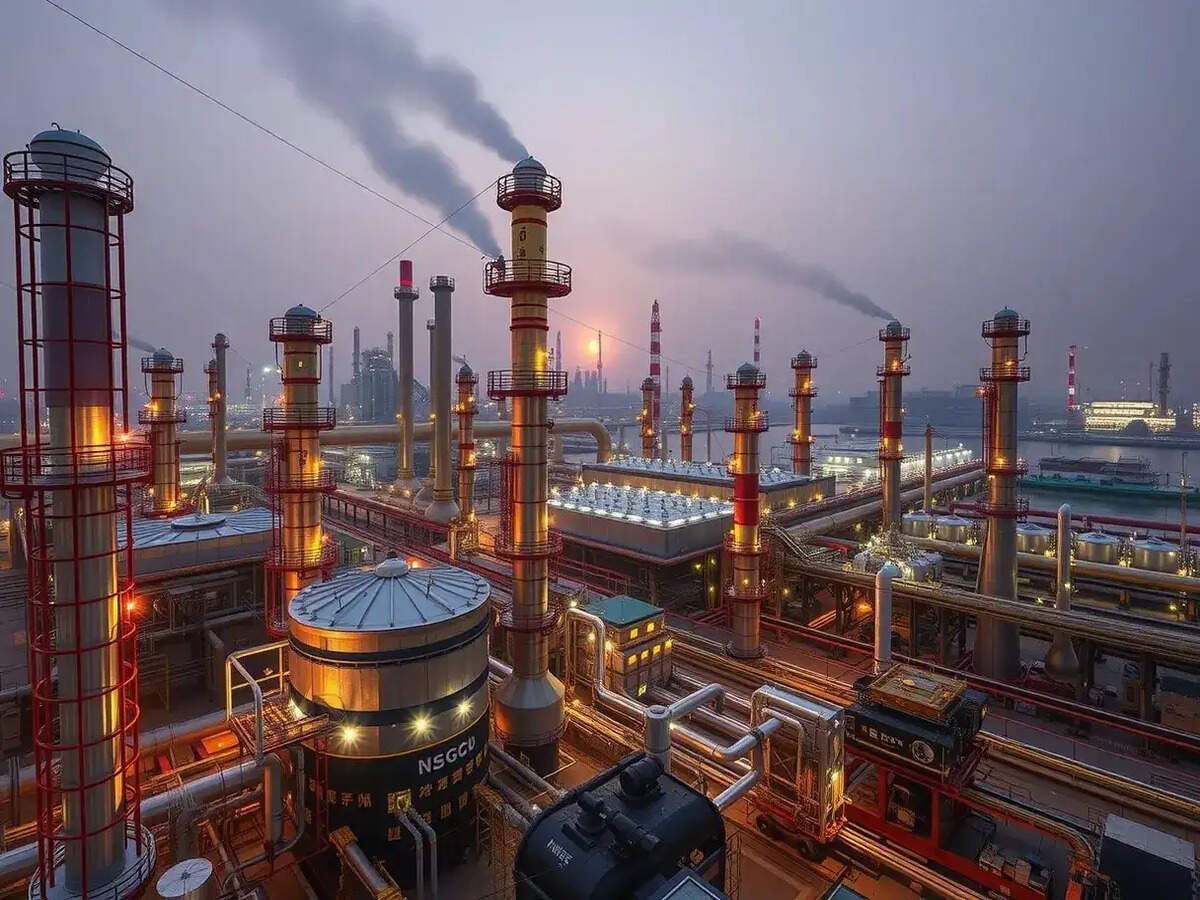
On May 2, Beijing's Commerce Ministry issued its first-ever injunction under the 2021 Blocking Rules, ordering Chinese firms to ignore American sanctions on five refiners accused of buying Iranian oil. Hengli Petrochemical, the biggest of those five, spent the summer obeying Washington instead.
The state says the sanctions are void. The company behaves as if they are fatal. What is at stake is whether American penalties reach inside Chinese boardrooms, and whether Tehran's last big customer can still pay. Trivium China noted on May 2 that Beijing issued the injunction to settle the legal question in its own favor. Hengli canceled crude purchases from West Africa and the Middle East and cut runs at its Dalian refinery rather than risk another American name on its supplier list, Reuters reported through China Global South on July 2.
On April 24, the Treasury's Office of Foreign Assets Control sanctioned Hengli Petrochemical (Dalian) Refinery Co. Ltd., China's second-largest independent refinery, alongside roughly 40 shipping firms and shadow-fleet vessels.
The Treasury's sanctions notice of April 24 said three tankers alone, BIG MAG, GALE and ARES, had delivered more than five million barrels of Iranian crude to Hengli since 2023. Cargoes routed through Sepehr Energy Jahan Nama Pars, the oil-sales arm of Iran's armed forces general staff, had generated hundreds of millions of dollars for the Iranian military, according to the OFAC announcement of April 24.
Hengli denied any Iranian trade and said its suppliers all guaranteed compliance with American rules, Caixin reported on April 27.
The pressure underneath is older and bigger. The New York Times described on August 20 how China has been practically alone in buying Iranian oil for years, taking as much as 90 percent of Tehran's seaborne exports, and how since late February a US naval blockade has all but cut off Iran's ability to ship oil by sea. Washington has sanctioned more than 1,000 Iran-related people, vessels and aircraft since February 2025, the US Treasury said on April 24.
The Hengli designation was the moment that campaign stopped hitting intermediaries and named a buyer with a famous brand and a listed parent. It changed who inside China feels the risk.
Treasury wants Iranian revenue choked and, with mid-term politics in mind, a visible Chinese scalp. Beijing wants the cheap crude that feeds its polyester and plastics chain, and the precedent that American penalties stop at the border, which is what the Blocking Rules injunction was for. Hengli's management wants to keep its other businesses — the PX and PTA chemicals, the Singapore trading desk, the new shipyard — out of American crosshairs. Those goals cannot all hold.
The retreat was fast and specific. Hengli's former Singapore trading arm, Hengli Petrochemical International, told counterparties it would cease operations by late May, Reuters reported through TankTerminals on May 12. It bought at least two million barrels of West African crude for late-June delivery to prove it had switched suppliers, Reuters reported through Sunday World in June, then scrapped those purchases anyway and cut refinery output as inventories ran down, Reuters reported through China Global South on July 2.
A company that believed Beijing's injunction would protect it had no reason to cancel paid-for crude.
The semi-annual accounts complicate the sanctions story. On August 19, Hengli Petrochemical reported first-half revenue of 98.221 billion yuan, down 5.45 percent from a year earlier, but net profit up 136 percent, figures published in the semi-annual report and carried by ChemNet on August 20. The refining unit is the wounded limb; the chemicals and polyester machine around it is printing money. Sanctions cut one artery of a conglomerate and the rest of the body compensated.
The 2012 lesson
Zhuhai Zhenrong is the analogue. In 2012, Washington designated Zhuhai Zhenrong, a Chinese state trader buying Iranian crude, and expected the flow to bend. It did not; China's buyers multiplied, Iran's exports held, and the designation became a badge rather than a wall. By that reading, the Hengli action is theater, absorbed by a buyer with no alternative customer for its barrels.
The counter-case argues the other way, and it is happening now. In 2012 Iran could always find another hull; today a US naval blockade has physically cut its seaborne oil trade, the New York Times reported again on August 20. The Institute for the Study of War noted in its Iran Update of August 21 that Chinese money cannot offset a blockade if Iran cannot physically deliver the barrels. Hengli's own canceled purchases are the firm-level version of the same fact: this time the constraint is ships and water, not paperwork.
The winners are quieter
Iran's armed forces lose the hundreds of millions of dollars that Treasury said in its April 24 press statement were generated by Hengli's Sepehr-routed cargoes. Hengli's Dalian refinery pays in throughput and idled capacity, and its shareholders already absorbed a share-price drop of as much as 10 percent the trading day after the designation, Caliber.az reported on April 27. West African and Middle Eastern sellers pay in canceled cargoes. The winners are rival Chinese refiners with clean supplier lists who take Hengli's product-market share, and the yuan-clearing banks Hengli promised to keep using for oil settlement to reassure counterparties, MarketWatch-OPIS reported on April 27.
The tradeable expression sits in Chinese petrochemical equities, in the spread between sanctioned and unsanctioned crude grades as Hengli's demand drops out of the Atlantic-basin market, and in product markets for paraxylene where Hengli is the world's largest single producer. Anyone tracing the blockade trade should watch tanker behavior at Hormuz, where Chinese-linked vessels have already turned around rather than transit, according to gCaptain's August reporting.
If this read holds, Hengli keeps buying only non-Iranian, fully documented crude, its Dalian runs stay below pre-April rates, and Beijing's injunction remains a legal shield no firm actually tests. What breaks the read: sanctioned shadow-fleet tankers discharging at Dalian again under Chinese navy or coastguard escort, which would mean the blockade is cracking and the state's defiance has become operational rather than rhetorical.
The consequence lands on the workers and chemical lines of a Dalian complex built to run on the cheapest barrel available, and on an Iranian military whose salary line just lost its biggest private customer. Beijing can declare the sanctions void. It cannot declare the barrels delivered.