Treasury steps in as top buyer of its long bonds after weak auction
The department doubled repurchases after dealers balked at a record-yield sale, moving from price taker to active defender of its own debt.
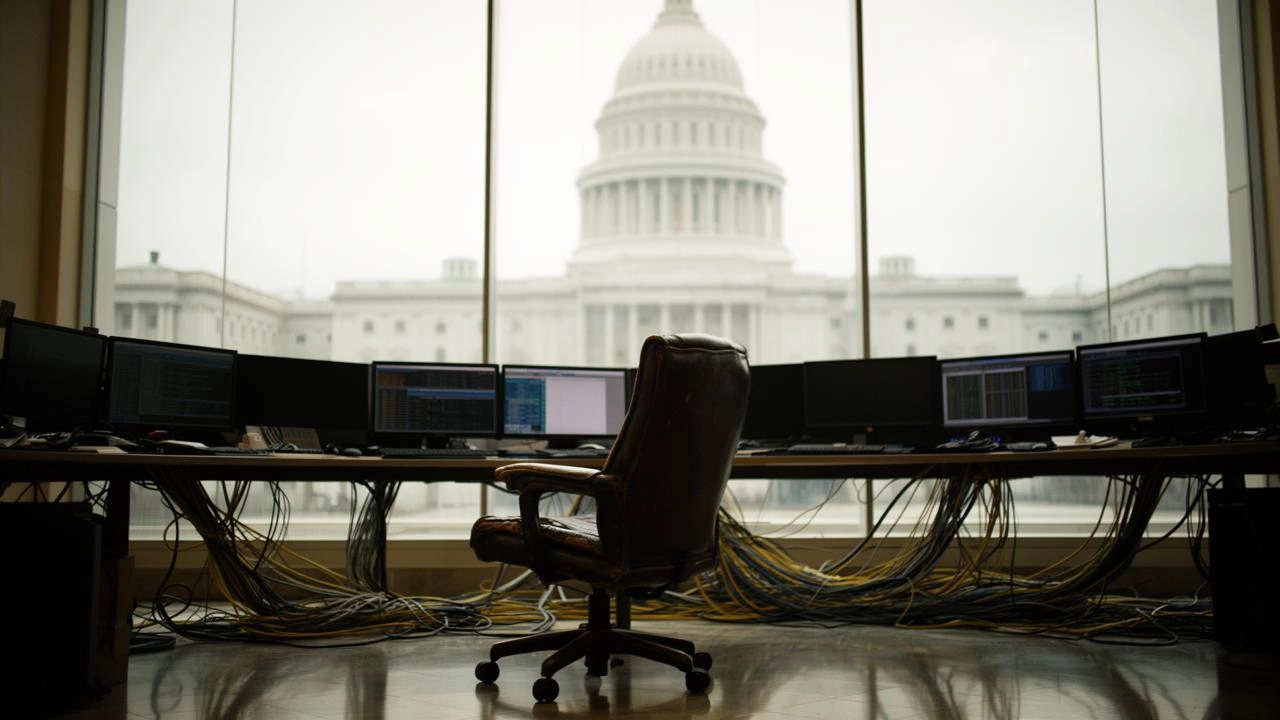
The contradiction opened this week and it cannot hold. On Monday the 30-year Treasury yield closed at 5.31 percent, its highest since 2007, and two days later the department that sells the bonds announced it would buy more of them. Scott Bessent says the department is managing liquidity. The week he chose says otherwise.
At stake is who sets the price of America's longest debt: the market, or the borrower itself. From September 9 through November 4, Treasury will repurchase long bonds at double the old size — from a maximum of 2 billion dollars per operation to at least 4 billion. Both Reuters and Market Monetarist reported the move on August 19. A borrower stepping up as the dominant buyer of its own debt is defending a price, and the timing shows it.
The trigger was an auction. The week before the announcement, Treasury sold 25 billion dollars of new 30-year bonds at a yield of 5.216 percent — the highest award for that maturity since 2001, as Market Monetarist noted on August 19.
Primary dealers were left holding more of the issue than usual, dealers pulled back on bids in the following sessions, and the long end slid for days. Bessent's buyback expansion landed the morning after the damage showed, timed like a circuit breaker rather than a routine operation.
Underneath sits five years of it. Quantitative tightening ended on December 1, but Market Monetarist reported on August 19 that the Federal Reserve has been buying Treasury bills ever since December 12, taking its bill holdings from 195 billion dollars in mid-December 2025 to 534 billion by August 12 — the highest level in the history of the series. The New York Fed calls these reserve-management purchases, not policy.
Treasury, meanwhile, has been tilting issuance short because long money got expensive, and in February its own borrowing advisory committee discussed whether heavier bill issuance could be calibrated partly around the central bank's demand. Read those three moves together and you get one machine: Treasury shortens what it sells, the Fed absorbs the short paper, and the only part nobody openly buys is the part everyone is worried about.
There is no vault of cash at the Treasury. The federal deficit ran 432 billion dollars in July alone, the largest monthly gap since March 2021; interest costs have reached roughly 1.2 trillion dollars this fiscal year; and total debt crossed 40 trillion dollars this week, hitting 40.05 trillion on Tuesday, according to Market Monetarist on August 19 and CNBC on August 20. Every dollar of buyback must be borrowed first, so net demand for government paper rises by nothing.
If the purchases are funded with bills, duration leaves the market and the government's budget grows more sensitive to the short rate — an Operation Twist run not by the central bank but by the debtor itself. Bloomberg made the same comparison the day of the announcement, calling back to Operation Twist in 2011, when the Fed swapped short holdings for long ones to pull down mortgage and bond rates (Bloomberg, Aug 19). It half-worked then because the institution doing the twisting could create the money. That is also what breaks the parallel today.
In September 2022 Britain's gilt crisis ended within days because the Bank of England stepped in with real balance-sheet power, while Her Majesty's Treasury stood helpless beside it. The American Treasury is now attempting the Bank of England's role with the Exchequer's tools, and the difference between those two offices is the whole story.
Who pays
If funding comes from bills, households and money-market funds holding short instruments absorb more rollover risk every time the Fed lifts or holds its rate, and the interest line — already past 1.2 trillion dollars this fiscal year — gets twitchier, as Market Monetarist reported on August 19. Deutsche Bank's George Saravelos called the combination of buybacks and currency intervention a soft-form financial repression on August 20, when CNBC carried his argument: savers are quietly taxed through held-down yields while prices keep rising above target. Savers pay first, and they did not choose the operation.
Profits are equally concrete. Primary dealers collect guaranteed bid-side flow on operations they know are coming, and risk assets levitated — bitcoin jumped to 78,000 dollars on the announcement, and MicroStrategy rose 12 percent the next day, both trading on the idea that the state will never let long yields find their level, according to CoinDesk on August 21 and TechTimes on August 20.
And the relief did not even survive the week. By Thursday's close the 30-year had given back nearly all of it, rising above 5.23 percent and touching 5.27 percent, right where it traded before the announcement, according to CNBC on August 20 and Bloomberg via ECM Source summary on August 21.
ING's rates team wrote that the move smacks of discomfort and warns the administration could do it again and again; the market's response suggests each repetition buys less than the last, as CNBC noted on August 20. Lars Christensen put the scale plainly against need: 2 billion extra per operation, set against 739 billion dollars of net borrowing this quarter alone, according to Market Monetarist on August 19.
The desk or the committee
Each failed defense invites a bigger one. Bigger operations push more funding into bills; bill-heavy funding pushes the Fed deeper into bill purchases to keep reserves ample; and eventually the question is not whether the Fed buys Treasuries but who decides which ones — the desk in Washington or the committee on Constitution Avenue.
Kevin Warsh, who resigned from the Fed board in 2011 protesting QE2, now chairs the institution whose balance sheet is growing again under a Treasury secretary propping up the long end.
His own writing supplies the test. Whether he says no when Treasury's issuance choices start dictating what the central bank buys, as Market Monetarist reported on August 19.
The September 9 start of the doubled operations and the next 30-year refunding auction will settle the liquidity story if yields settle back toward 5 percent and stay there without further escalation. What breaks it is faster — a third doubling, buyback sizes pushed beyond 4 billion within the quarter, or the Fed shifting its purchases from bills into coupons. Any of those means the borrower has stopped managing the market and started owning it.
The people left carrying this are not traders but anyone paid in fixed income. Retirees living on bond coupons, pension funds matching decades-old promises, and every mortgage borrower priced off the 30-year, whose rate briefly dipped and then returned to where it started before anyone refinanced a thing. Japan, China and European holders have all been net sellers, so domestic households and borrowed-money funds have become the marginal buyer of last resort — until the Treasury outbid them with their own future taxes (Market Monetarist, Aug 19).
A government can borrow in its own currency forever, but it cannot simultaneously insist the price is free and manufacture the demand. Sooner or later the long end is either repriced by strangers or owned by friends. This week America chose friends.