Russia buys its own gasoline back from a refiner it partly owns
Ukrainian drones broke the refineries, so Moscow is importing its own fuel through the shadow fleet it built to dodge sanctions.
A tanker tied up at Murmansk on August 5 was carrying gasoline from Nayara Energy, the refiner nearly half owned by Rosneft. Ukrainian reporting found that not a single batch of the cargo had sold more than a week later, according to NV Ukraine on August 17.
Russia, the world's third-largest exporter of refined products, had taken its first-ever shipment of Indian gasoline to cover a shortage at home.
The seller is a subsidiary of Moscow's own state-controlled oil giant. The Moscow Times wrote on August 12 that the state is buying back the very product it used to ship abroad for hard currency. Every actor in this story now depends on the others failing, and summer made their conflicts physical.
Ukraine's drone forces want refining capacity gone, because every cracked distillation column shrinks both the diesel funding the Russian army and the gasoline ordinary Russians need to keep quiet. Rosneft wants Nayara to keep earning dollars wherever it can find them, since the refiner is one of the few assets still converting Russian crude into exportable product. Nayara lost many of its markets when the European Union put it under its eighteenth sanctions package in July, and pushed sales toward India's state retailer Hindustan Petroleum instead, as Reuters reported on July 22.
The Kremlin wants cheap, calm motoring before winter.
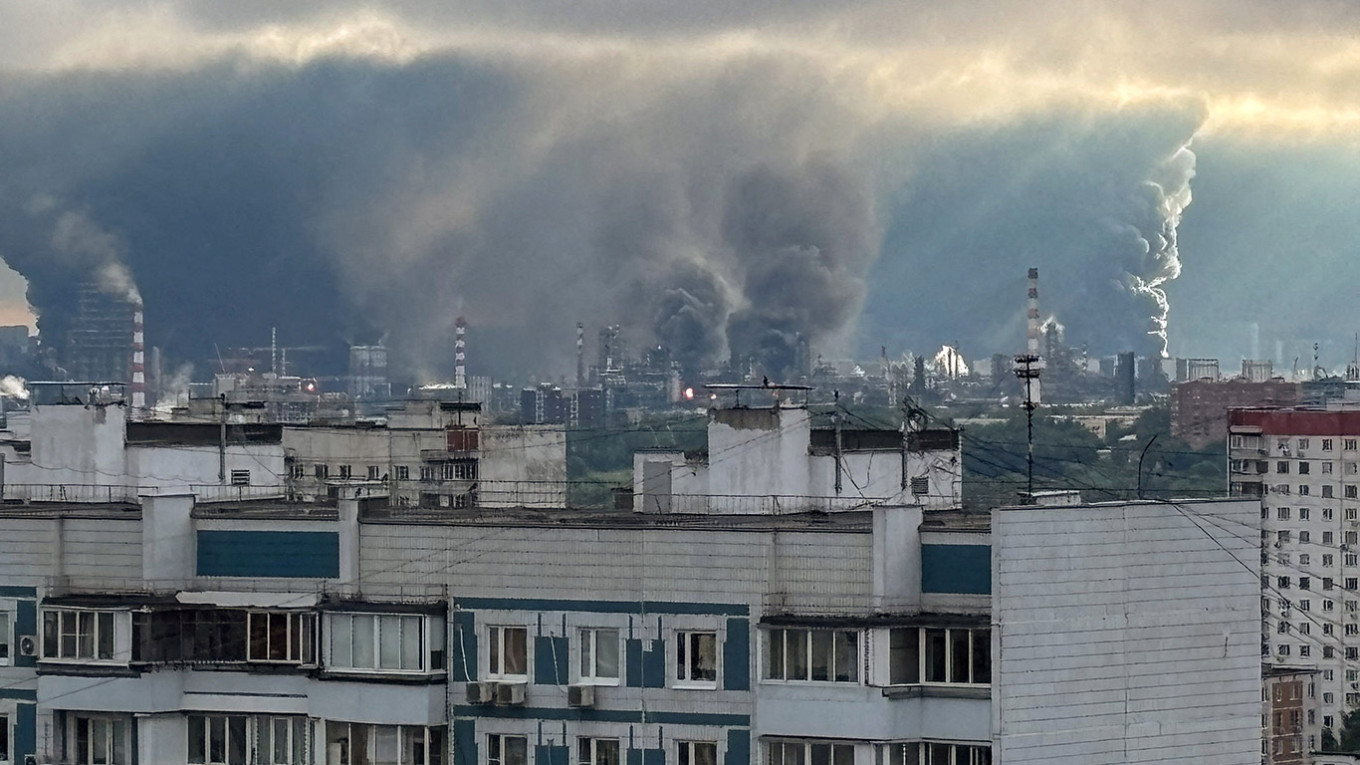
Russia spent four decades letting its refining fleet age without serious modernization, so a handful of big complexes carry regions on their own. When Ukrainian drones struck repeatedly through July, including an attack on Nizhnekamsk that killed twelve people, Al Arabiya reported on August 10, there was no slack anywhere in the system to absorb it.
Bloomberg's analysts put Russian crude processing at 3.6 million barrels per day in July, down hard from normal running levels, in figures published August 12. The government banned fuel exports through the end of 2026 and imposed rationing across Russia and annexed Crimea; The Moscow Times reported both on August 12. Pump prices are up 17.7 percent since January, reaching 77.69 rubles per liter by August 3 before easing slightly, according to the same report that day. RFE/RL found on August 19 that drivers in several regions report long lines and Kremlin-imposed limits on how much stations may sell.
A Russian-flagged tanker named Cyclone loaded roughly 42,000 metric tons of gasoline at Nayara's Vadinar terminal in mid-June, then passed the cargo across a chain of shadow-fleet tankers off Egypt before it finally landed in Russia in early August. Bloomberg reported the route via The Moscow Times on August 12. The same evasion machinery built to sell Russian oil abroad is now being run in reverse to bring fuel home. Every extra transfer at sea costs money, days, and risk, all to fix a problem created by drones costing a few thousand dollars each.
American and British bombers in 1944 did not try to destroy every German factory. They hit the synthetic-fuel plants and refineries again and again, and by autumn German aviation training had all but stopped because there was no fuel to teach with. A refining system is fragile precisely because it is concentrated and slow to rebuild, since a column takes months to recast while a drone takes minutes to arrive. What is different this time is that Russia can buy replacement product on world markets, which Hitler could never do.
Moscow papered over earlier shortfalls with imports from Belarus and Kazakhstan before India entered the picture, The Moscow Times reported on August 12, and Russian officials now claim the market has partially stabilized. If Nayara plus Minsk plus Astana can hold the line, the crisis becomes a managed inconvenience rather than a break. That read fails on volume alone. Belarusian surpluses were never sized to replace millions of barrels of lost domestic runs, and the Murmansk cargo sitting unsold suggests even small volumes are struggling to reach buyers inland.
Drivers pay first, in rubles and in queue time, while farmers competing for diesel during harvest pay in yield timing. Rosneft pays twice, once in lost export margins at home and once in Nayara's shrinking access to Western markets that the EU sanctions just closed further. The budget pays too, because every ton of gasoline imported rather than exported is tax revenue that evaporates. The profiteers sit outside the war: traders brokering the Egypt transfers, tanker owners charging war-risk premiums, and other Asian refiners filling the space Russian barrels abandoned.
An Indian company, sanctioned by Europe because of its Russian parent, Nayara now survives by selling into Russia, which pays in rubles or barter rather than dollars. The more that pattern sets, the more Nayara stops being an Indian refiner with Russian ownership and becomes simply an offshore arm of Rosneft. Delhi has tolerated this so far because the arrangement keeps discounted crude flowing, but each new EU designation narrows Delhi's room to look the other way.
Drones have turned Russia from a fuel exporter into a fuel beggar within one season, and no amount of shadow-fleet plumbing changes that the machines making the gasoline are the ones being destroyed.
Importing your own brand of gasoline from your own subsidiary is the invoice for two decades of skipped maintenance arriving at once.