Carriers cancel 49 sailings to defend rates as record fleet looms
When every new ship threatens to sink the price of every existing one, the fastest way to defend a freight rate is to cancel the voyage.
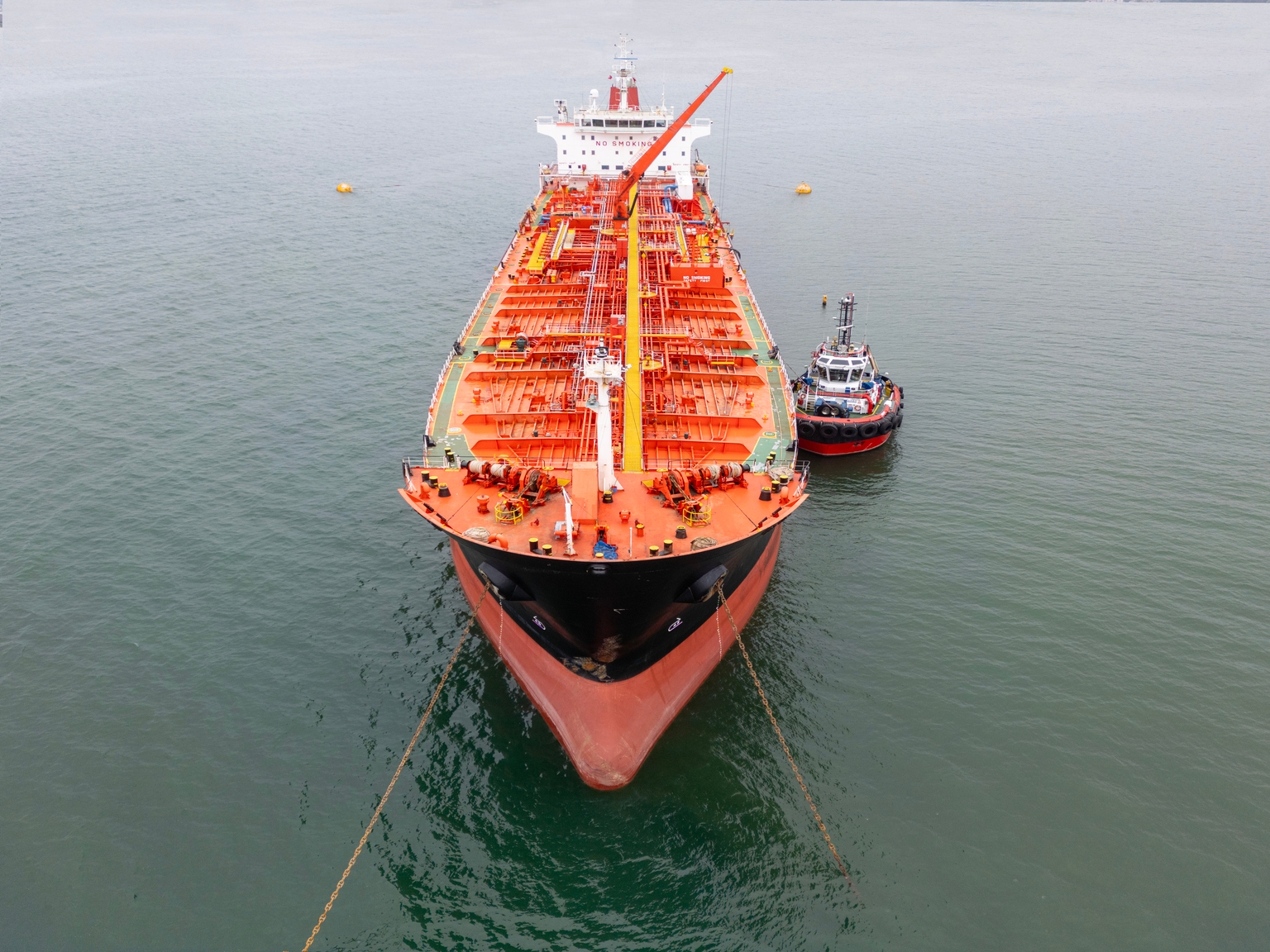
A fifth of the world's container fleet exists only on paper, ordered and part-built: 207 million CGT in the global orderbook, the highest share since 2011.
A fleet that size should break prices. Instead, spot rates sit far above where all that new steel should put them, because when demand softened after an early peak season this August, the carriers did not cut rates. They cut sailings.
Trends in Logistic reported on August 3 that across the main East-West trades, 49 voyages are expected to be cancelled between late August and late September, about six percent of scheduled departures, according to the Drewry Cancelled Sailings Tracker of August 21.
Only a handful of actors matter. MSC, Maersk, CMA CGM, Hapag-Lloyd, ONE and COSCO control most East-West capacity through their alliances, and each has the same incentive: keep utilisation high so that a ship earning nothing at anchor does not drag down the price of the ship next to it.
MSC has even begun sending vessels back through the Suez Canal, darkening seven ships as it resumed transits, which removes capacity from sight while the network reorganises, The Loadstar reported on August 18.
Against them stand the shippers, the importers and retailers buying space, who want a soft market where they can push annual contracts down. Right now the carriers are winning that fight lane by lane.
Typhoons Bavi and Noul congested the Yangtze and Pearl river deltas in late July, creating container shortages and slot scarcity out of China. The Loadstar reported on August 4 that the Shanghai-US West Coast spot rate jumped over twelve percent in a week to $6,229 per 40-foot box, with US East Coast at $9,054.
The slow pressure underneath is the orderbook. Every month of 2027 and 2028 deliveries threatens to repeat what happened in the last cycle, when new megaships met flat trade and rates fell for years. The blank sailing is the industry's answer to its own future: withdraw space now so the market never learns what the extra tonnage is actually worth.
Lloyd's List, via Kuehne+Nagel's July 23 tally, found carriers blanked ten to fourteen percent of scheduled capacity across four major east-west trades in the first half of 2026, against six to eight percent in the same period of 2019. What used to be an emergency measure is now routine housekeeping.
On Asia-US East Coast services, scheduled capacity grew forty-six percent since 2019 while withdrawn capacity more than tripled. The pattern repeats everywhere: Asia-Mediterranean withdrawals up 159 percent against fifty-six percent capacity growth.
New ships are being delivered into a market that refuses to receive them.
The last time carriers tried this
From 2012 to 2015, the first wave of eighteen-thousand-box ships delivered and the carriers tried exactly this, announcing slow steaming and service mergers while scrapping stayed thin. It half worked for two years, then failed completely once deliveries outran trade growth and the industry entered its worst stretch since containerisation began.
Consolidation is the claimed difference this time — fewer, larger lines with deeper pockets and a demonstrated willingness to idle tonnage. But 2023 argues back. Those same consolidated lines blanked aggressively and still watched rates collapse, because demand evaporated faster than capacity could be pulled. Discipline buys time. It has never bought immunity.
Who pays
Shippers on firm lanes are absorbing defended base rates, and Indian exporters to Europe got the sharpest example: Hapag-Lloyd lifted published base rates from Nhava Sheva and Mundra to North Europe from $280 to $805 per TEU effective August 6, nearly triple in a single revision, as The Loadstar reported on August 1.
Meanwhile the lanes where blanks cannot hold are correcting openly, with Asia-North Europe rates down around ten percent month over month, according to WOWL market update of August 6. Where carriers control capacity tightly you pay more without a reason you can see; where they do not, prices fall in public.
Maersk and Hapag-Lloyd shares have climbed sharply this year as investors accepted that high rates will last, and Hapag-Lloyd raised its 2026 profit outlook on strong demand, Asia Cargo News reported in August 2026.
If the discipline cracks, the damage lands first on those share prices and second on charter rates for mid-sized containerships, the tonnage least committed to long-term strings. For retailers, the risk is not a spike but a floor. Contract negotiations in the spring of 2027 will be conducted against carriers who proved all year that they would rather sail empty than cheap.
There is also a quieter cost nobody invoices. A blanked sailing is a missed port call, a rolled container, a factory waiting an extra week.
WOWL reported on August 6 that June schedule reliability fell to sixty-two percent with late vessels averaging more than five days behind, partly typhoon-driven, partly the arithmetic of running a network with holes punched in it.
Inventory managers respond by ordering earlier and bigger, which front-loads demand further and gives the carriers another excuse to defend rates. The discipline feeds itself.
September is the test. Whether the blanking holds after Chinese port congestion clears and the typhoon season ends. If cancellations fade and rates sag anyway, the whole edifice was weather and fear, and the 2012 playbook resumes.
Drewry already expects monthly blanks to fall from 54 in June toward 36 in August, according to Lloyd's List via Kuehne+Nagel on July 23, and Linerlytica's Tan Hua Joo argued blank sailings stop making sense when rates are this high because owners are adding extra loaders instead.
The carriers say they are managing supply. The test is whether they still say it when managing it costs them cargo.
The container lines have not repealed the shipping cycle; they have only borrowed against it.
Every voyage cancelled today protects a rate that a 2027 delivery will undercut tomorrow, and the reader with a brokerage account should understand that blank sailings are a claim the orderbook will eventually collect. Discipline works until the ships arrive. They always arrive.