Private credit absorbs AI debt as public issuance slows
AI-related borrowing moves to private placements, with life insurers buying long-term assets and unpublished terms shifting risk outside daily market pricing.
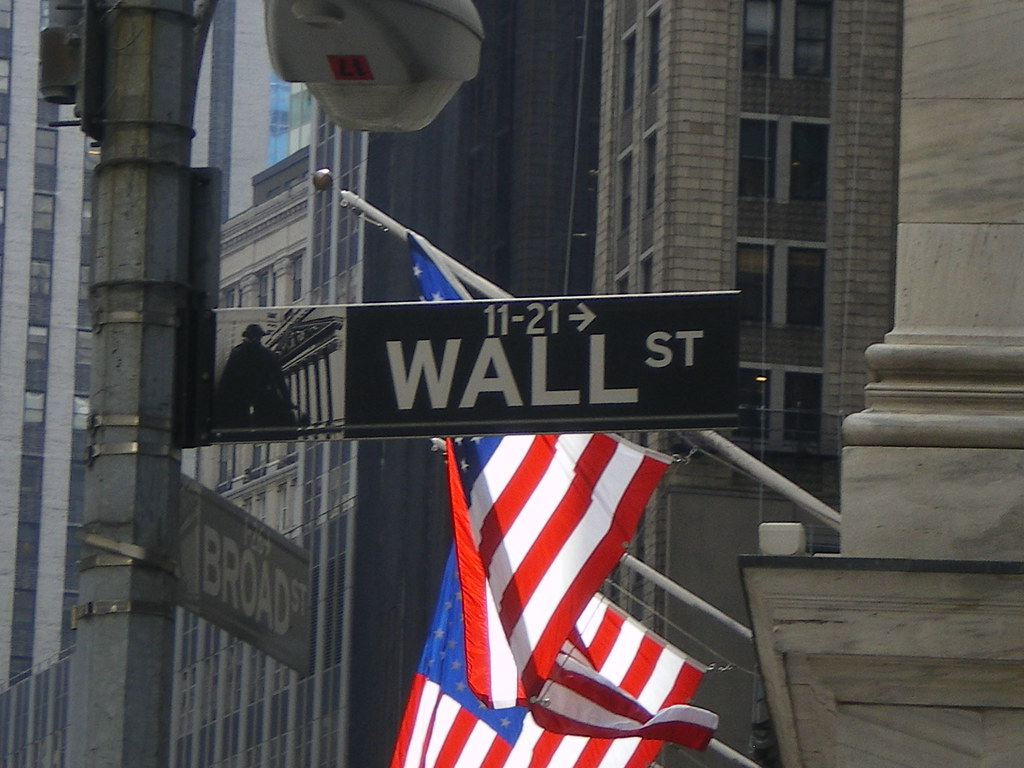
Oracle’s wider spreads and Meta’s seven-percent data center deals now price the largest corporate borrowing surge in a generation on public screens. The fastest-growing part of this borrowing is shifting to private placements and direct-lending deals with unpublished terms, where no price is known until something breaks. The shift is intentional.
At stake is who absorbs the losses if the AI buildout outpaces new revenue, because these private debt rooms now grade their own results. Morgan Stanley expects global AI-related debt issuance to approach $570 billion in 2026, and Reuters reported in July 2026 that around $236 billion had been raised by May 31, nearly four times the previous year’s pace.
Private bond issuance alone reached about $81 billion through May, the strongest start in a decade according to Bloomberg, which cited Private Placement Monitor in July 2026. Bloomberg also reported that life insurers are the main buyers, seeking long-dated assets to match their annuity liabilities. The Bank for International Settlements noted more than $40 billion of private credit loans to AI-related firms in 2025, up from around $3 billion fifteen years ago (BIS Bulletin No. 120, June 2026).
The insurers want thirty-year cash flows
Alphabet, Amazon, Microsoft, and Meta plan roughly $700 billion of capital spending this year, Reuters wrote in July 2026, while preserving their investment-grade ratings. They do this by structuring much of the borrowing at the project level inside special-purpose vehicles, which keeps the headline debt off their main balance sheets. For private credit managers, one-on-one deals mean higher fees and long-duration assets to resell to pensions and insurers. Life insurers want thirty-year cash flows to match thirty-year guarantees; a leased data center, for them, resembles a utility.
Moody’s warned in July, as Forbes reported on July 23, that six major hyperscalers including Alphabet, Amazon, and Microsoft are now amassing enough infrastructure debt to threaten their credit quality.
This month’s pivotal deal came from IREN. A former bitcoin miner turned AI cloud builder, IREN closed a $3.65 billion investment-grade GPU financing facility for its Microsoft contract on June 1, according to the IREN company statement. That included a $2.10 billion private placement at SOFR plus 2.13 percent, arranged by Goldman Sachs and J.P. Morgan, with insurers and asset managers buying the paper.
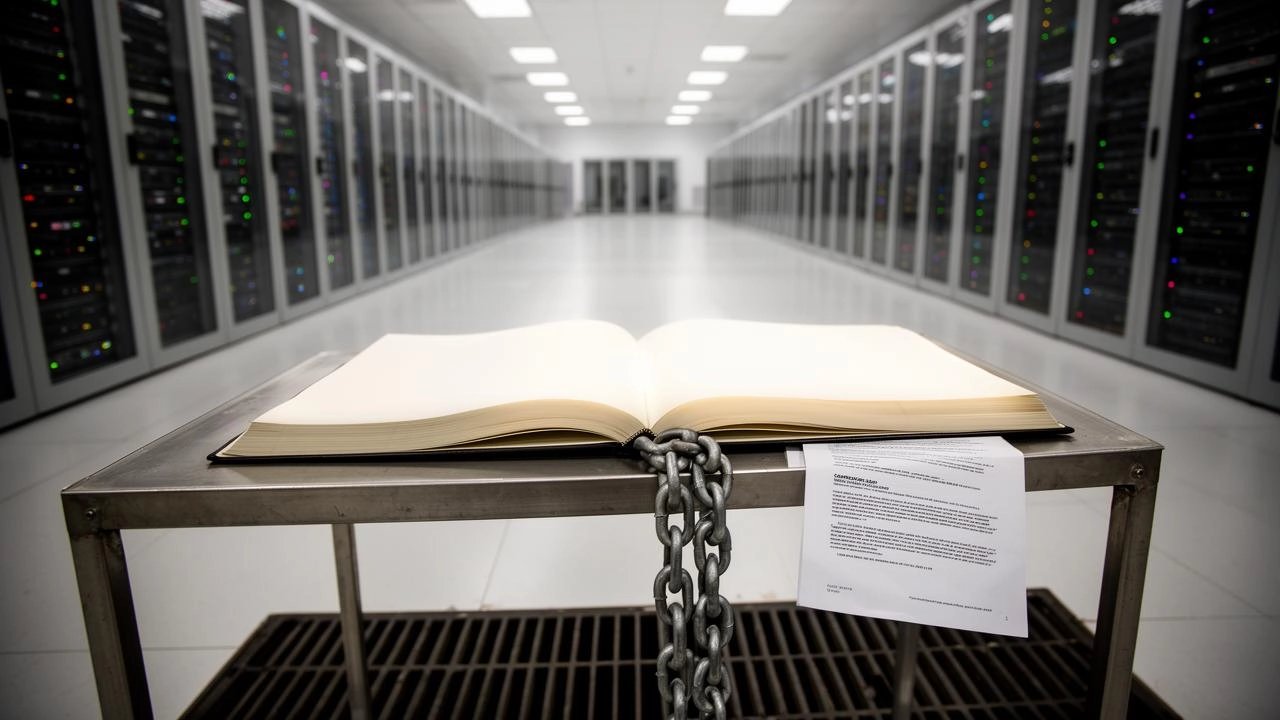
The collateral is a stack of graphics processors, not a Microsoft or Amazon guarantee, and their value decays faster than the loan matures. Bloomberg reported in August 2026 that PIMCO pushed further, working with Bank of America on about $14 billion of debt for an Oracle data center in Michigan. Now, asset managers lend on buildings they would never underwrite as ordinary real estate.
Data center shells can last decades; accelerators are obsolete in years; the debt matures in twenty. The mismatch worked when a triple-A tenant signed a fifteen-year lease. It turns risky as the lending moves downmarket to second-tier developers and neocloud firms whose repayments hinge on a single lease. The Bank for International Settlements described the resulting web as “circular financing”: chipmakers and hyperscalers fund the labs and clouds that then commit to buy the same products, with terms poorly disclosed and the possibility that a single asset gets pledged more than once (BIS Bulletin No. 120, June 2026).
Who ends up holding depreciating chips
In the 1990s, telecom carriers borrowed heavily against fiber networks whose capacity exceeded demand. WorldCom, for example, hid the revenue gap off the books until the entire sector’s debt was repriced at once, and the public market took the losses because the private structures then were too small to matter. Today, the private market has grown large enough to absorb shocks itself. The repeating pattern is confidence that demand will grow in time to meet the debt.
The American private placement market has long financed railroads, mines, and utilities, historically posting default rates as low or lower than public high-grade bonds because one-on-one deals come with tighter lender protections. If the tenants keep paying, these are simply utilities with better yields. The bet embedded in every deal is that AI revenues will grow to meet obligations before refinancing is needed.
As public AI bonds like Oracle’s and Meta’s widen, less prominent issuers migrate to private deals where pricing is hidden. Insurers and pensions end up holding claims on depreciating chips and single-tenant buildings, marked quarterly by the same managers who made them, not by the market. Should AI monetization falter, losses would hit insurance and retirement accounts first—places where selling is not an option and markdowns appear slowly. Michael Burry told Business Insider in July 2026 that higher rates for longer could force a reckoning for private credit firms that rushed into the buildout.
The European Central Bank classified the opacity of AI financing through private credit as a financial stability risk in August 2026. AXA has already started curbing its AI data-center exposure and tightening its private credit policies, according to Insurance Business Magazine in August 2026. As sellers step back, remaining buyers—the primary group now American annuity writers seeking yield—bear the pricing risk.
The read is confirmed if private placement issuance continues to set records through the second half, public AI bond deals struggle or price wide, or insurers reveal data-center markdowns. The read breaks if hyperscaler capex for 2027 is sharply cut, forcing giants to borrow on their own balance sheets, or if AI revenues grow swiftly enough to cover leases and debt, making opacity irrelevant.
Founders’ vehicles stay bankruptcy-remote by design, with rating agencies assessing only what is visible.
The one left paying is the annuitant in Ohio whose insurer needed a thirty-year asset and bought a Michigan data center filled with chips that may matter for just five years, on undisclosed terms. The market did not lose sight of this debt. It chose not to see it.