War-risk insurers leave as Red Sea shipping resumes after peace agreement
Ship traffic through the Suez Canal is up as major lines return, but insurers cut coverage after new attacks and lost faith in ceasefires.
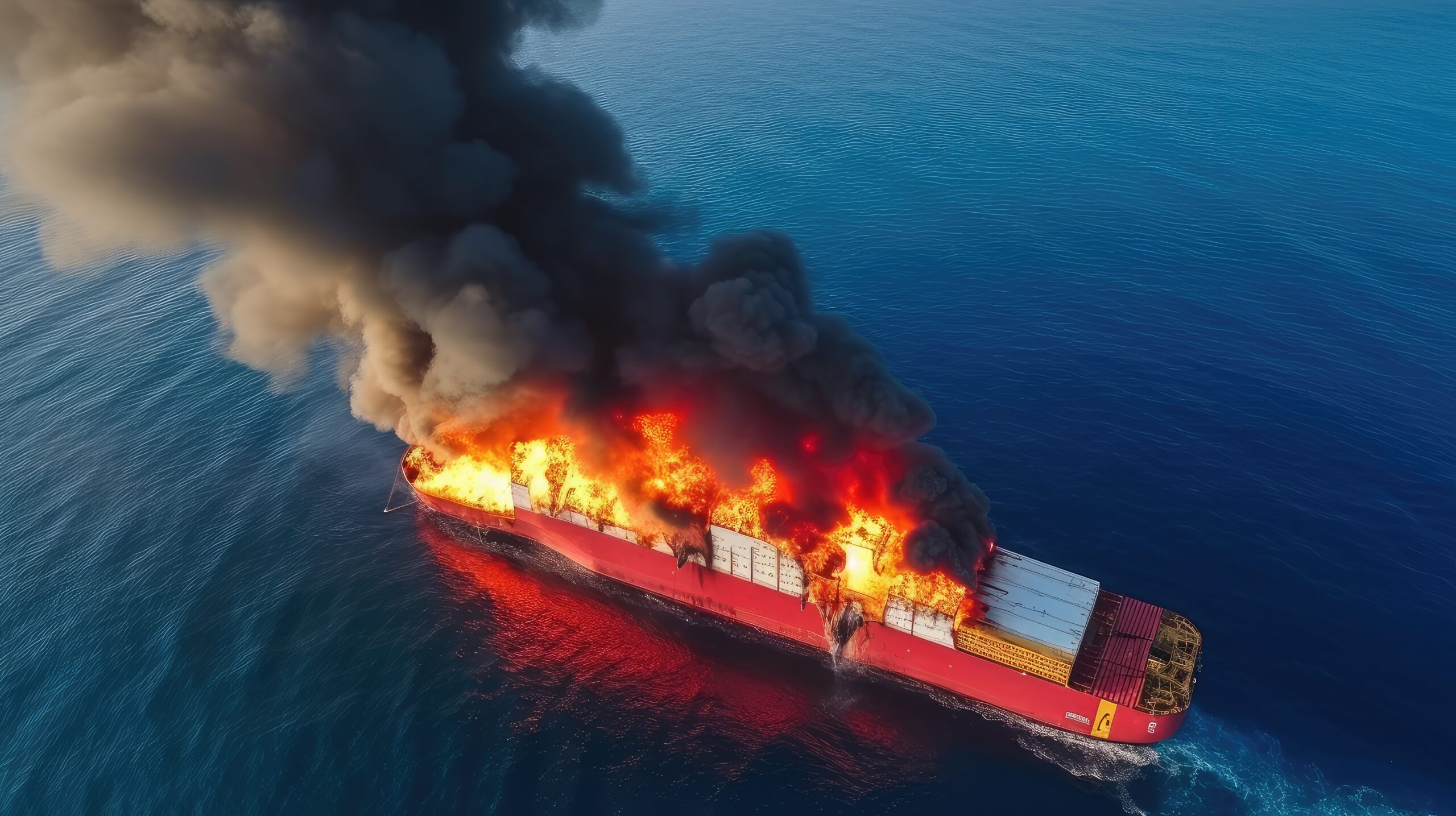
A ship can now cross the Red Sea more cheaply than it can insure itself, but the traffic and the insurance market are moving in opposite directions.
Between July 20 and August 16, vessels passed through the Suez Canal 1,088 times, up from an average of 946 per four weeks between January and mid-June — a 14 percent climb led by containerships and LNG carriers coming back, according to the Lloyd's List Intelligence Red Sea Brief of August 20. Maersk, CMA CGM and Cosco have resumed or committed to transits (The Loadstar, Aug 2026).
The underwriters watched the same water and reached the opposite conclusion: nine protection and indemnity clubs tightened or cancelled war-risk cover across the Red Sea, Gulf of Aden and Indian Ocean after their reinsurers served cancellation notices, most changes biting on August 16 (PortNews, citing Skuld, Aug 2026). The traffic went one way, the insurance the other, and only one of those moves can be wrong.
The Houthis declared a naval blockade of Saudi Arabia on July 20 and attacked Saudi-linked tankers to prove it was real; two were hit in the first days and one burned in the Red Sea, Al-Monitor reported on July 23, quoting Reuters.
Saudi Arabia wants its ports working and its oil moving, and has shifted exports toward Suez in response, The National reported on July 27.
The container lines want their old shortcut back, because every week around the Cape of Good Hope burns fuel, crew time and schedule integrity they cannot invoice. Egypt wants canal revenue. The underwriters at Lloyd's want none of these things. They want a loss ratio below one, and a ceasefire is not evidence, it is a promise made by men with missiles.
The Joint War Committee, the London body whose listed areas tell underwriters where the danger sits, pushed its Red Sea notification line about 800 kilometers north, so calls at Jeddah and Yanbu now attract additional premium, according to Lloyd's List Intelligence on august 6. Neil Roberts, secretary of the committee and head of marine at the Lloyd's Market Association, said the change reflects the Houthis' escalation and their attacks on Saudi vessels, as Reuters reported via Global Banking & Finance Review on July 30.
Price moved first
Indicative war-risk premiums for southern Red Sea voyages jumped to between 1 and 2 percent of a ship's value, from 0.3 percent before the Houthi announcement; for ports further north including Jeddah and the Yanbu oil terminal, quotes went from 0.25 percent to 1 percent inside a day, Reuters reported via Global Banking & Finance Review on July 30.
On a mid-sized tanker, a percentage point of hull value can wipe out the margin on the voyage entire, and so owners simply do not make the call. Traffic data shows them not making it — transits at Bab al-Mandeb fell 24 percent in the first week of the blockade, from 354 to 269, according to Kuehne+Nagel, citing Lloyd's List Intelligence in late July, and broader traffic through the strait slumped 56 percent from before the embargo, The National reported on July 27.
Skuld received a notice of cancellation from its commercial reinsurers covering certain war risks and passed it to its members, with cover terminating automatically from August 16 for ships trading into the listed territories; West of England got the same notice, and several other clubs issued identical cancellations on August 12, according to Shipping Telegraph on August 14. Reinsurers are the money behind the money. When they leave, the clubs cannot keep offering the cover at any price a shipowner would pay, so they built buyback cover out of their own funds to keep members sailing, Lloyds List reported on August 19.
The new charterers' buyback carries a blanket exclusion for Saudi-linked tonnage, Lloyd's List reported on August 19. The International Group of P&I clubs, the mutual insurance backbone of world shipping, will keep almost everyone covered through the Red Sea except ships connected to the very country the blockade targets. Riyadh can reroute oil through Suez all it likes. Its flag, its cargo and its charterers now carry a scarlet letter priced in London, enforced not by any government but by an exclusion clause.
The tanker war kept cover
Through the tanker war of 1984 to 1988, when Iraq and Iran struck more than 400 merchant hulls in the Gulf, Lloyd's underwriters never left; they repriced, voyage by voyage, and the convoys and flags kept coming because cover existed at a cost. That is the model everyone assumed would repeat here: war as a surcharge rather than a shutdown. What is different this time is who is leaving.
In the 1980s the risk sat with insurers who had no alternative place to deploy marine capital. Today the reinsurers backing the clubs can redeploy, and they have concluded that a region containing an active naval blockade plus a wider Iran war offers better uses for their balance sheet.
The counterargument to my own read. The clubs' buyback proves the system self-heals, and once no tanker is hit for eight straight weeks the exclusions lapse and premiums drift back down. That happened after earlier Houthi pause periods in 2024 and early 2025, when quotes eased without any treaty being signed.
But follow the money forward and the healing looks slower than the healing of 2024. First, only owners who can absorb a total-loss bet sail south, which skews the transit mix toward the biggest container lines and the least sanctionable cargoes.
Second, the ships that do go run dark or take unknown routes, as more than six in ten vessels passing Hormuz already do, Al Jazeera reported on August 20, and dark shipping raises the odds of miscalculated engagement by every navy in the water. Third, freight rates on Asia-Europe lanes carry the war-risk and surcharge load permanently, and the cost lands on whoever buys the goods at the end of the chain.
The winners are narrow and identifiable — the Cape route ports bunkering ships that used to take Suez, and whichever reinsurers wrote this risk elsewhere before the cancellations landed.
Egyptian state coffers pay too, still far short of pre-crisis canal receipts even after the recent recovery. So do shipowners holding charters into Jeddah and Yanbu, who now quote a premium five to seven times the spring level depending on the port. And Saudi Arabia, uniquely. The one belligerent party that cannot buy peace for its hulls at any market price, because the market has excluded its tonnage outright.
One number settles the argument. If the four-weekly Suez transit count holds above roughly 1,100 while the clubs' buyback exclusions quietly expire on schedule this autumn, then the insurance retreat was a bargaining position and the corridor normalizes by October. If transits stall or reverse while premiums hold above half a percent, then London has durably decoupled from whatever the diplomats sign, and the Red Sea becomes a place ships cross only when their contract forces them to.
A ceasefire ends when the shooting stops. An insurance market ends when the capital leaves, and capital does not sign anything.