China must choose between American farm imports and Iranian crude purchases
The Trump administration’s dual demands force Beijing to either uphold its U.S. farm goods pledge or face sanctions for buying Iranian oil, as both deadlines approach.

Two promises are now on the table for September and they cancel each other out. President Donald Trump expects Xi Jinping in Washington next month to sign off on China's purchase pledges, the $17 billion a year of American farm goods Beijing committed to through 2028, per the White House announcement carried by Serra Group on May 19.
That same week, Treasury Secretary Scott Bessent put Hengli Petrochemical, which runs a 20-million-ton-a-year refinery at Dalian, on the sanctions list for buying Iranian crude. He told CNBC, via Asia Times on August 22, that he is preparing "the toughest sanctions in history" against anyone who keeps Iran supplied.
China cannot honor the first promise while absorbing the second, and Trump's blockade of Iran cannot work unless China does exactly that. Both pledges come due inside the same month, and each one voids the other.
The trigger was the death of the Islamabad memorandum. Signed June 18 as a sixty-day truce, it expired August 17 with nothing behind it. The American oil waiver lasted twenty days, the naval-blockade lift twenty-seven. Ronin's Grips laid out that timeline in its August 22 OSINT summary.
Within a day of expiry an Iranian missile launch near Emirati territory pushed the United Arab Emirates to suspend all trade and financial ties with Tehran on August 18, cutting off the Dubai banking and logistics network Iran had leaned on for decades, Ronin's Grips reported in the same summary.
Bessent now has a package set for August 24 aimed at Iran's shadow fleet and its main buyer, China, according to Ronin's Grips on August 22.
The slower squeeze
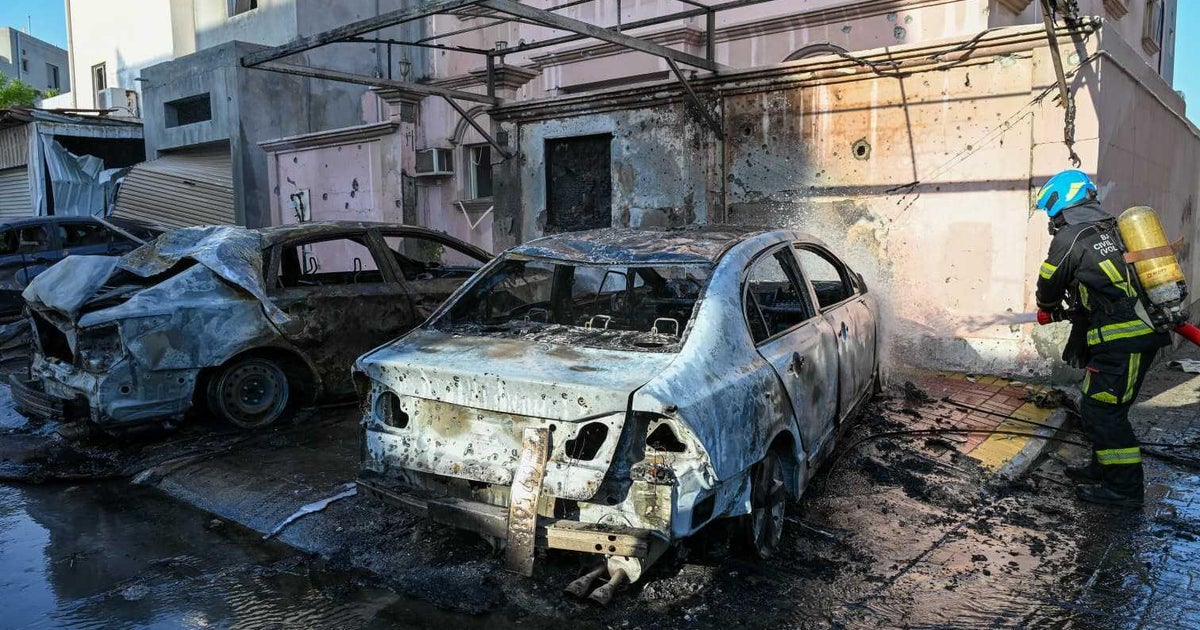
Underneath the diplomacy sits a squeeze that predates any truce. Iran's crude loadings ran near 893,000 barrels per day in July during the waiver window; by mid-August they were down to about 156,000.
Tanker-tracking data compiled in the Ronin's Grips OSINT summary of August 22 shows the share of untraceable "dark" barrels jumped from 5 percent to 66 percent as everything moved onto shadow tankers. By the same compilation, clearance of Mideast Gulf crude overall has fallen back to roughly 2.3 million barrels per day, against 6.1 million during the truce weeks, with idle floating storage back up around 110 million barrels.
The strait itself stays contested. Trump insists it is open and that no talks with Tehran are happening; Iran's own transit authority is running a permit-and-toll regime, extorting fees in bitcoin through a sanctioned insurer, as reported by US News on August 18 and Ronin's Grips on August 22.
Trump wants a visible win before the November midterms: a strait under American control, an Iran squeezed toward collapse, and a photo with Xi holding up Chinese purchases of American crops. Bessent wants the "greatest coordinated economic isolation in the history of the world," his phrase, and warned any country offering Iran a lifeline will be pushed toward "economic oblivion," as he put it on CNBC via Asia Times on August 22.
Iran's leadership wants survival. Parliament speaker Mohammad Baqer Ghalibaf admitted the regime does not survive if its people go hungry, even as armed forces chief Major General Ali Abdollahi promised a "crushing, punishing, and devastating" answer to the new sanctions, the Jerusalem Post reported on August 21.
China's answer is already public. Foreign ministry spokesman Lin Jian said Beijing opposes the isolation campaign outright and will not treat sanctions as a solution, telling Iranian state broadcaster that pressure only escalates, Asia Times reported on August 22. The arithmetic explains why. China buys roughly 80 percent of Iran's shipped oil, by Kpler's 2025 tally, and half of China's energy comes out of the Persian Gulf, as noted by Asia Times on August 22 and the Jerusalem Post on August 21.
Beijing's teapot refiners are independent, outside the American financial system, and have absorbed designations before. Washington hit another one back in April and the barrels kept moving through Malaysian ship-to-ship transfers, as documented by Caliber.Az on April 25 and the Ronin's Grips vessel table of August 22.
1941, not 2018
In 1941 Washington froze Japanese assets and kept negotiating, telling Tokyo trade could resume if it left China; the embargo made every offer meaningless because compliance required surrendering the war. By autumn both sides understood the talks were theater, and the embargo drove the decision for war rather than peace.
The difference this time is that Iran is a besieged exporter whose only weapon is the waterway itself, and China is the market the whole system sells into. The counterexample argues the other way: in the 2020 Phase One deal China fulfilled only 83 percent of its pledged purchases and nothing broke, no crisis, no rupture; pledges quietly underdeliver and life goes on, as CSIS noted on June 1. If Beijing simply slow-walks the farm commitments while buying Iranian barrels through intermediaries, both the pledge and the blockade may rot rather than explode.
But rot has a price schedule, and oil is printing it. Brent traded near $91.53 on August 19 after tanker tracking showed strait activity falling again, and it climbed back above $89 early this week as the sanctions deadline approached, per ProPakistani on August 19 and TradingEconomics on August 24. During the truce window prices had retreated on exactly the hope now dead, that Gulf clearance would normalize.
Every point of dark-barrel share is a barrel nobody insures conventionally, which means war-risk premia spread across every hull leaving the Gulf, paid by refiners in Jamnagar, Yanbu and Rotterdam who never traded an Iranian molecule.
First, the blockade tightens: Iranian barrels fall further, shadow fleet discounts widen, and the August 24 designations push more Hong Kong-linked operators out of the trade. Second, Beijing retaliates where it is cheap. Soybean bookings stall, and the state traders who bought thirteen cargoes in early August stop picking up the phone, as Bloomberg reported via nutriNews on August 12.
Third, Trump faces a midterm farmer with unsold beans and a gasoline consumer paying Gulf risk premium, and must choose between escalating against his largest customer or settling with Tehran on terms weaker than the Islamabad deal he let die.
The people who absorb this are specific. The Dalian refinery workers at Hengli whose feedstock is now contraband, the Dubai traders who lost their Iranian clearing house overnight when Abu Dhabi cut ties on August 18, and the crews of the eight newly designated tankers, ships like the Lisboa and Seeker 8, now uncallable at any port with American exposure, per the OFAC designations carried in Ronin's Grips on August 22. None of them sit in the negotiating rooms. All of them carry the ledger.
The purchase pledge is already dead and the blockade will be forced to soften, because a blockade only works when the biggest buyer enforces it, and the biggest buyer has publicly refused. What confirms it: Chinese soybean bookings going quiet through late August and September while Iranian loadings stabilize on shadow tonnage despite the new designations.
It breaks when Beijing quietly rations teapot purchases after August 24 and the farm cargoes resume, which would mean Washington's financial chokehold beat the arithmetic, and the strait opens on American terms.